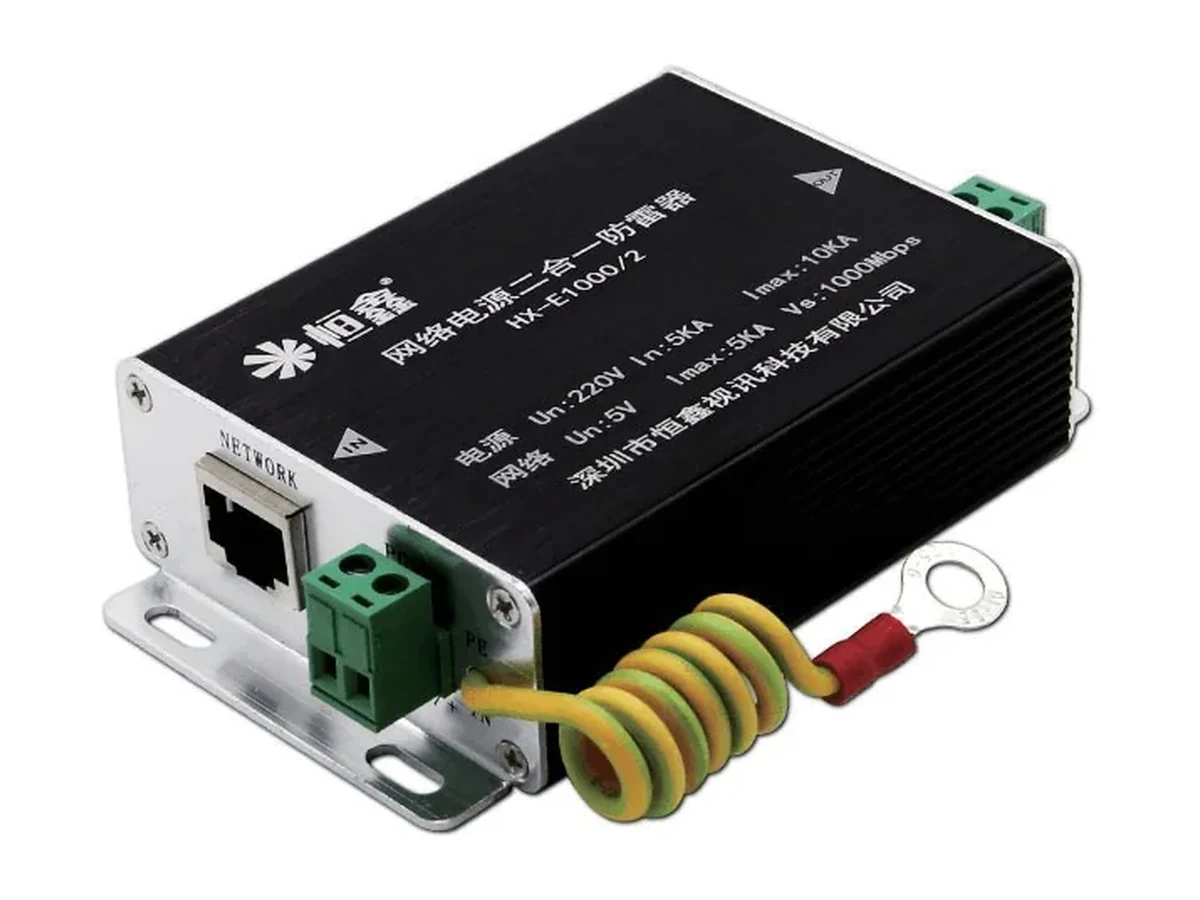
HX-1000EP-4/PW
Gigabit 2-in-1 Network + Power Surge Protector
- Un
- 220 V
- In
- 5 kA
Product category
Surge protection is the part of a camera installation that is invisible until the day it matters. A pole-mounted camera is the highest point on most sites, and the cable that powers it is the path a surge uses to reach the switch indoors.
The 16 models here cover network data pairs, PoE lines, AC supply, and combined network-plus-power units, with nominal discharge currents from 2.5 kA and maximum discharge currents up to 20 kA. Housing formats are wall-mount, DIN-rail and 19-inch.
Every figure below comes from the current product data. Click a model to open its full specification page.
| Model | Rated Voltage (Un) | Nominal Discharge Current (In) | Max Discharge Current (Imax) | Transmission Rate |
|---|---|---|---|---|
| HX-1000EP-4/PWGigabit 2-in-1 Network + Power Surge Protector | 220 V | 5 kA | 10 kA | 10/100/1000 Mbps |
| HX-100EP-2/PW2-in-1 Network + Power Surge Protector | 220 V | 5 kA | 10 kA | 10/100 Mbps |
| HX-100EPD-3/PW3-in-1 Network + Power + Data Surge Protector | 220 V | 5 kA | 10 kA | 10/100 Mbps |
| HX-CH220V/10AAuto-Reclosing Earth-Leakage Protector 220V 10A | 145–280 V | — | 10 kA | — |
| HX-DG20/2PSingle-Phase AC Surge Protection Module | 220 V | 10 kA | 20 kA | — |
| HX-DG20/4PThree-Phase AC Surge Protection Module | 380 V | 10 kA | 20 kA | — |
| HX-DG200/2DIN-Rail Network + Power Surge Protector | 220 V | 5 kA | 10 kA | 10/100 Mbps |
| HX-DG2000/2DIN-Rail Gigabit Network + Power Surge Protector | 220 V | 5 kA | 10 kA | 10/100/1000 Mbps |
| HX-DG2000/POEDIN-Rail Gigabit PoE Surge Protector | 48 V | 2.5 kA | 5 kA | 10/100/1000 Mbps |
| HX-E100100M Network Surge Protector | 5 V | 2.5 kA | 5 kA | 10/100 Mbps |
| HX-E1000Gigabit Network Surge Protector | 5 V | 2.5 kA | 5 kA | 10/100/1000 Mbps |
| HX-P12VDC 12V Power Surge Protector | 12 V | 5 kA | 10 kA | — |
| HX-PDU10A/88-Way Surge-Protected PDU | 220 V | 5 kA | 10 kA | — |
| HX-POE1000EGigabit PoE Network Surge Protector | 48 V | 2.5 kA | 5 kA | 10/100/1000 Mbps |
| HX-POE100E100M PoE Network Surge Protector | 48 V | 2.5 kA | 5 kA | 10/100 Mbps |
| HX-RJ45-E1000/248/16/24-Port Gigabit Network Surge Protector | 5 V | 2.5 kA | 5 kA | 10/100/1000 Mbps |
HX-1000EP-4/PW
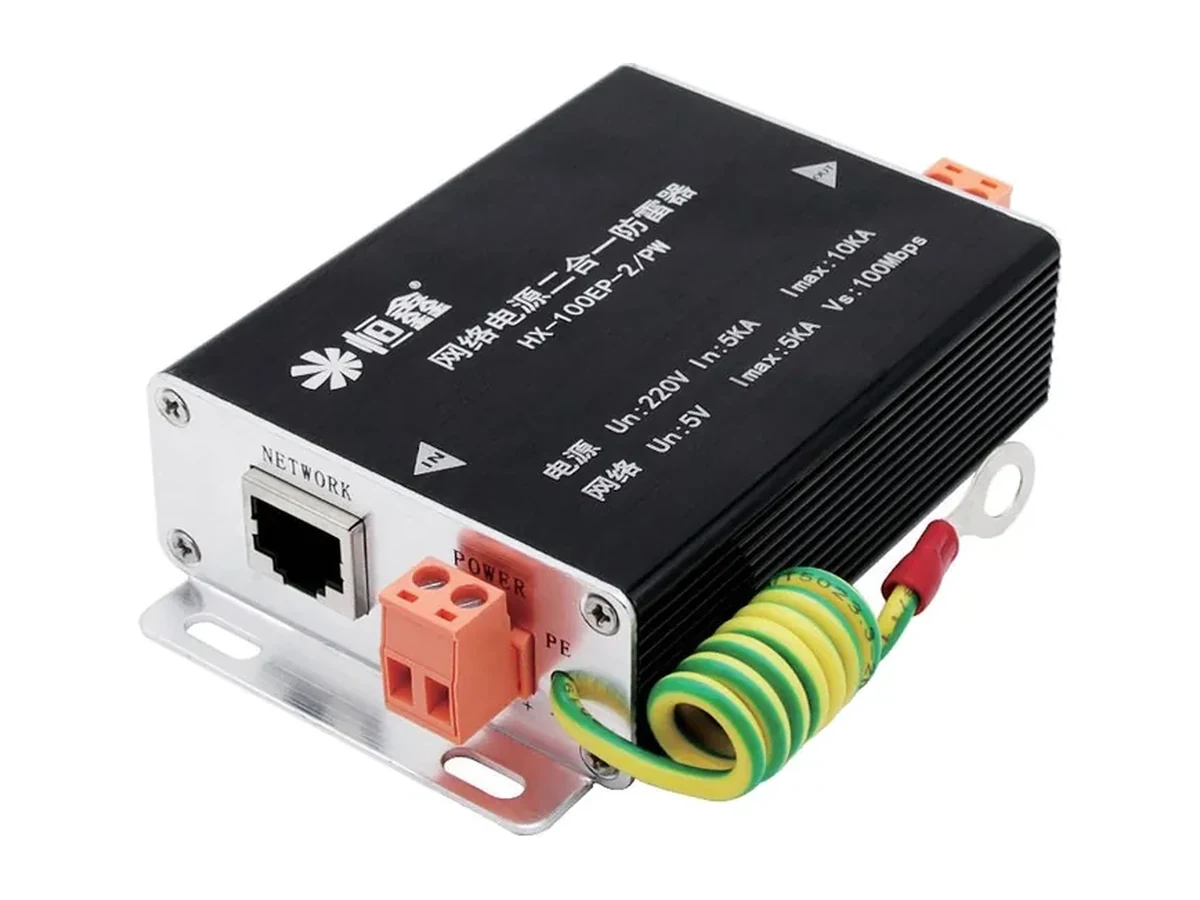
HX-100EP-2/PW
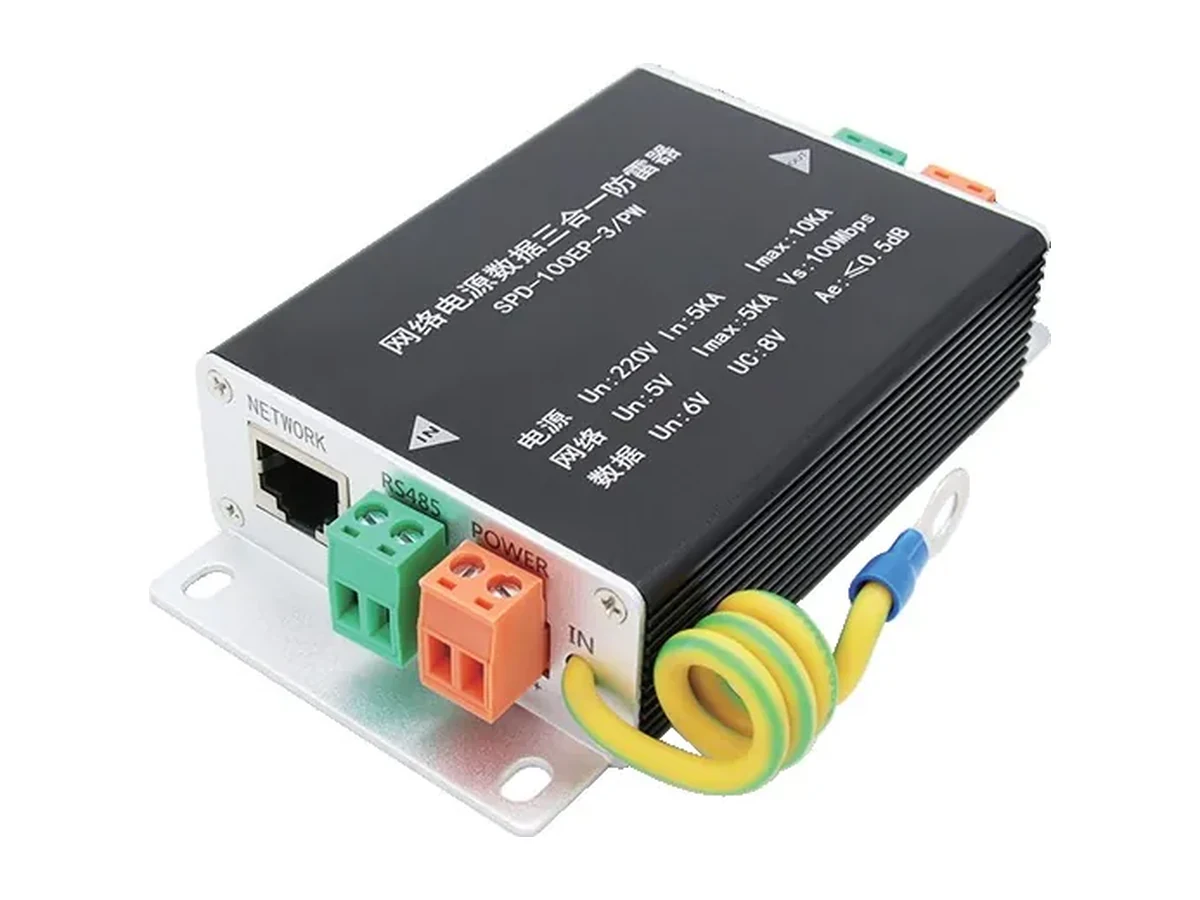
HX-100EPD-3/PW
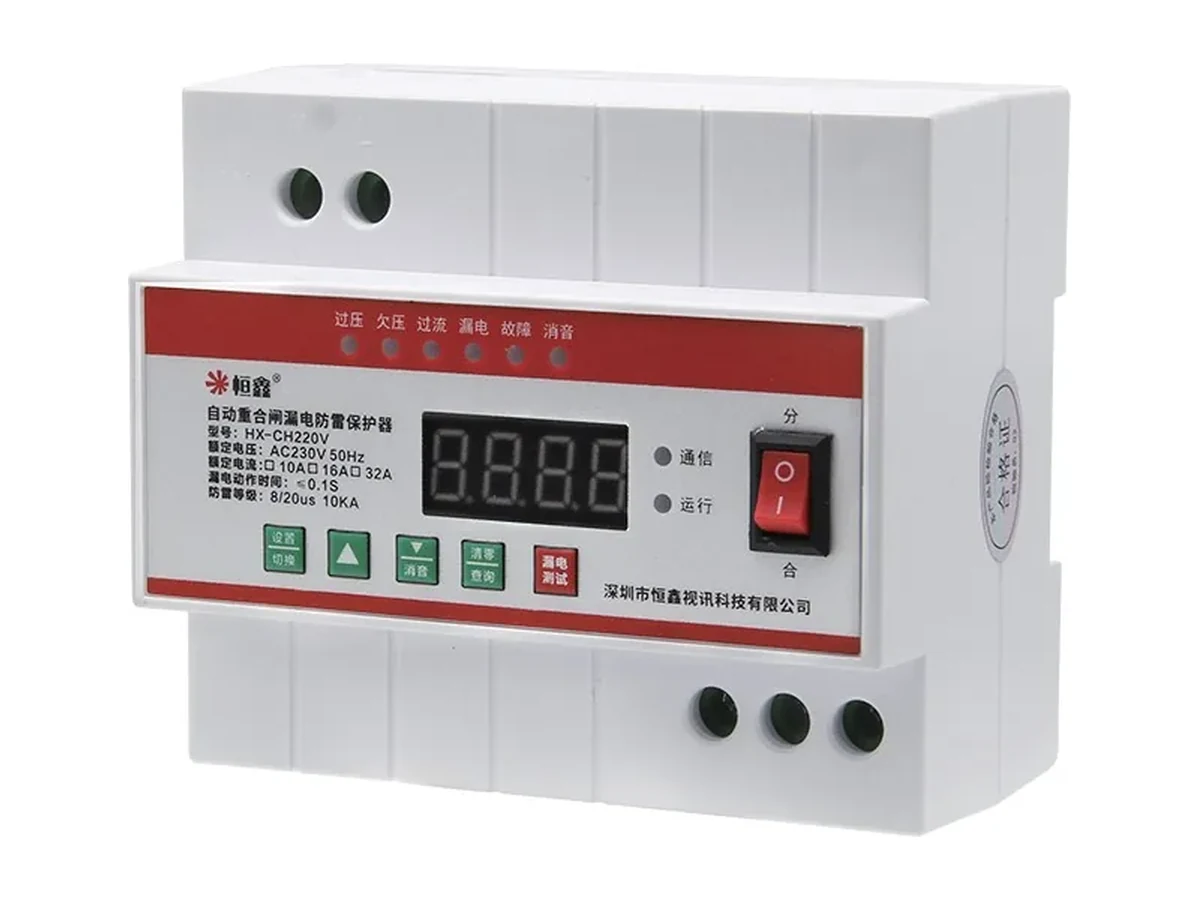
HX-CH220V/10A
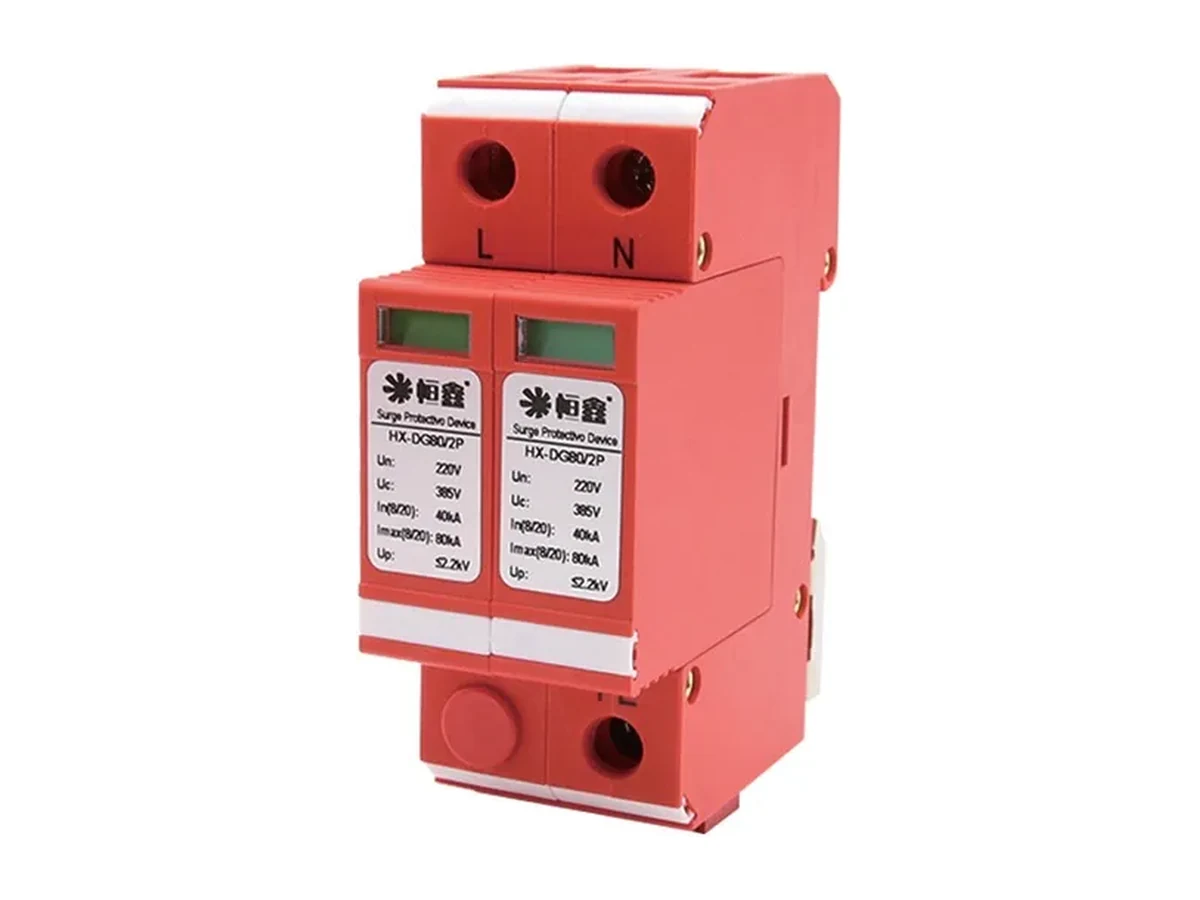
HX-DG20/2P
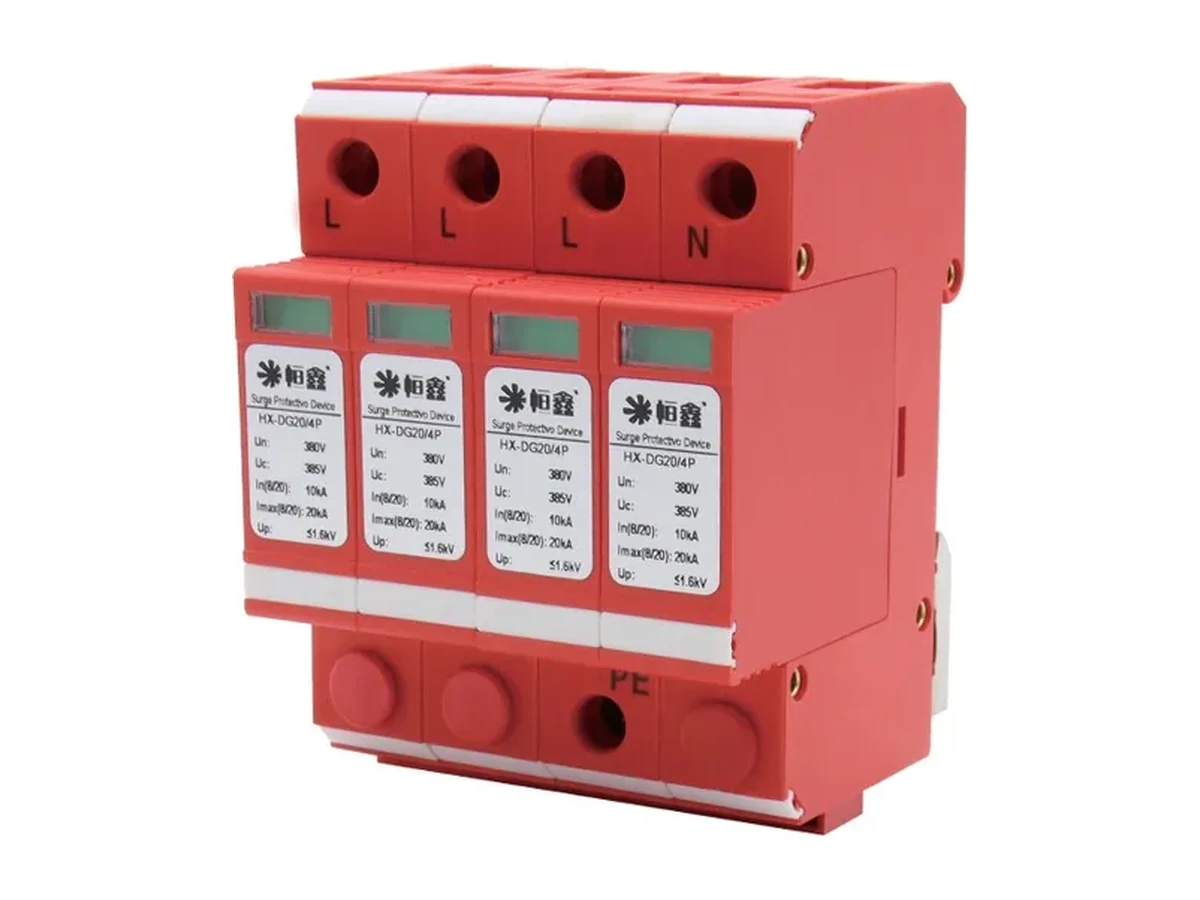
HX-DG20/4P
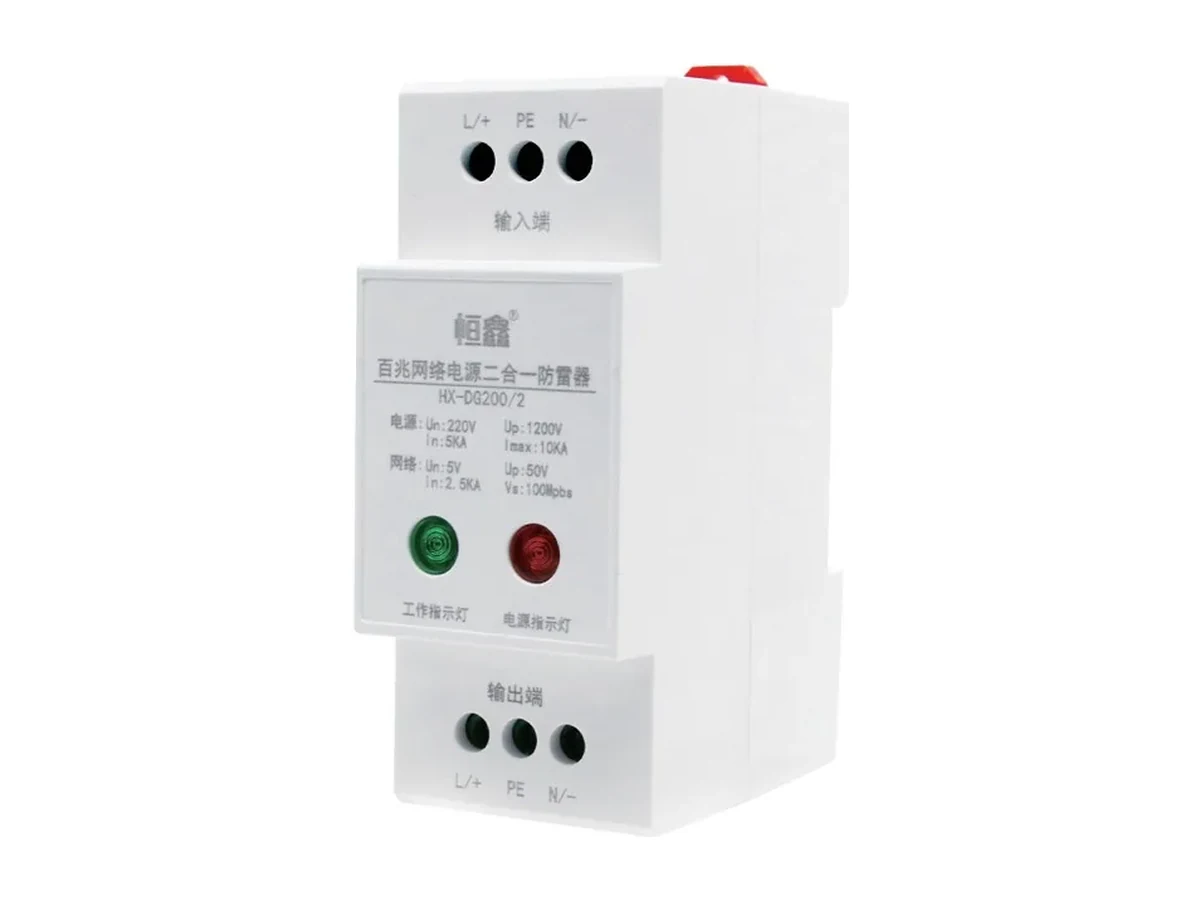
HX-DG200/2
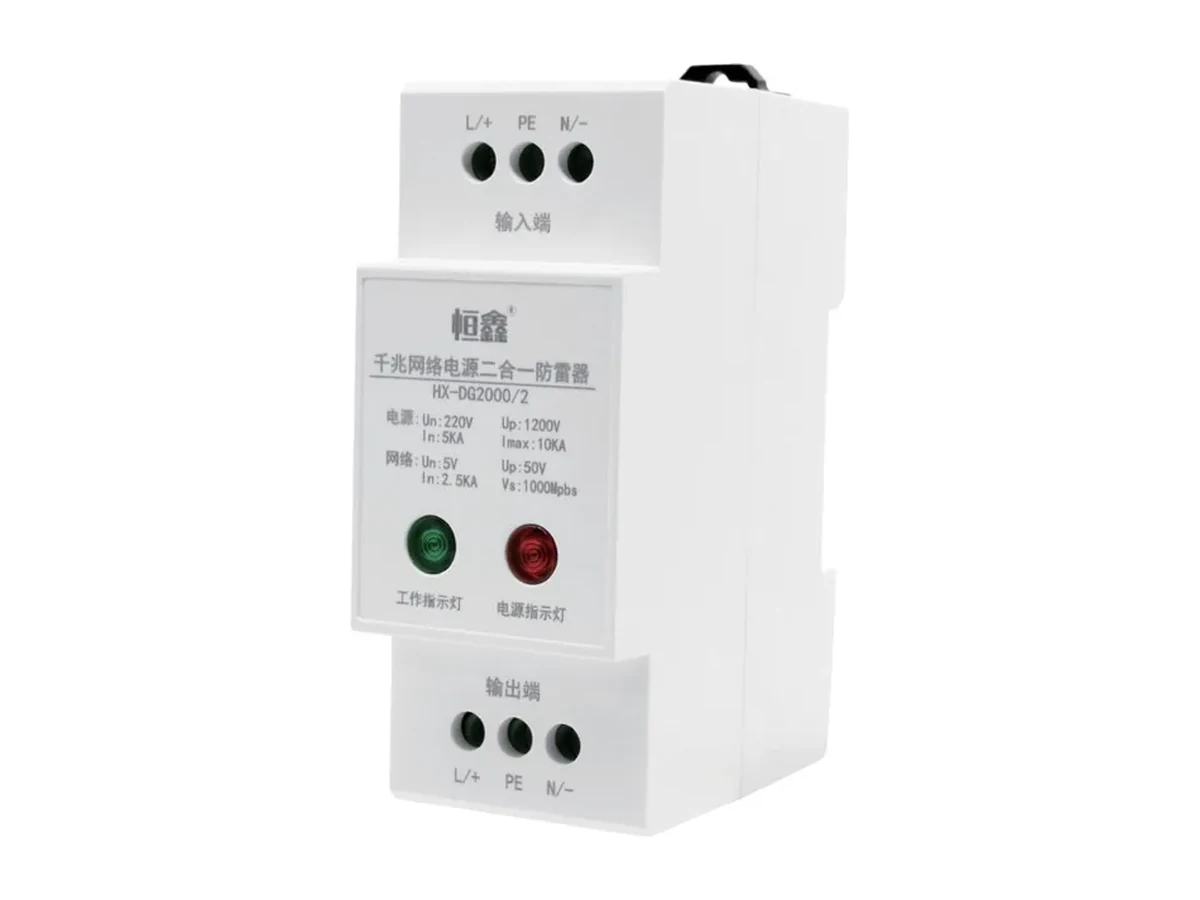
HX-DG2000/2
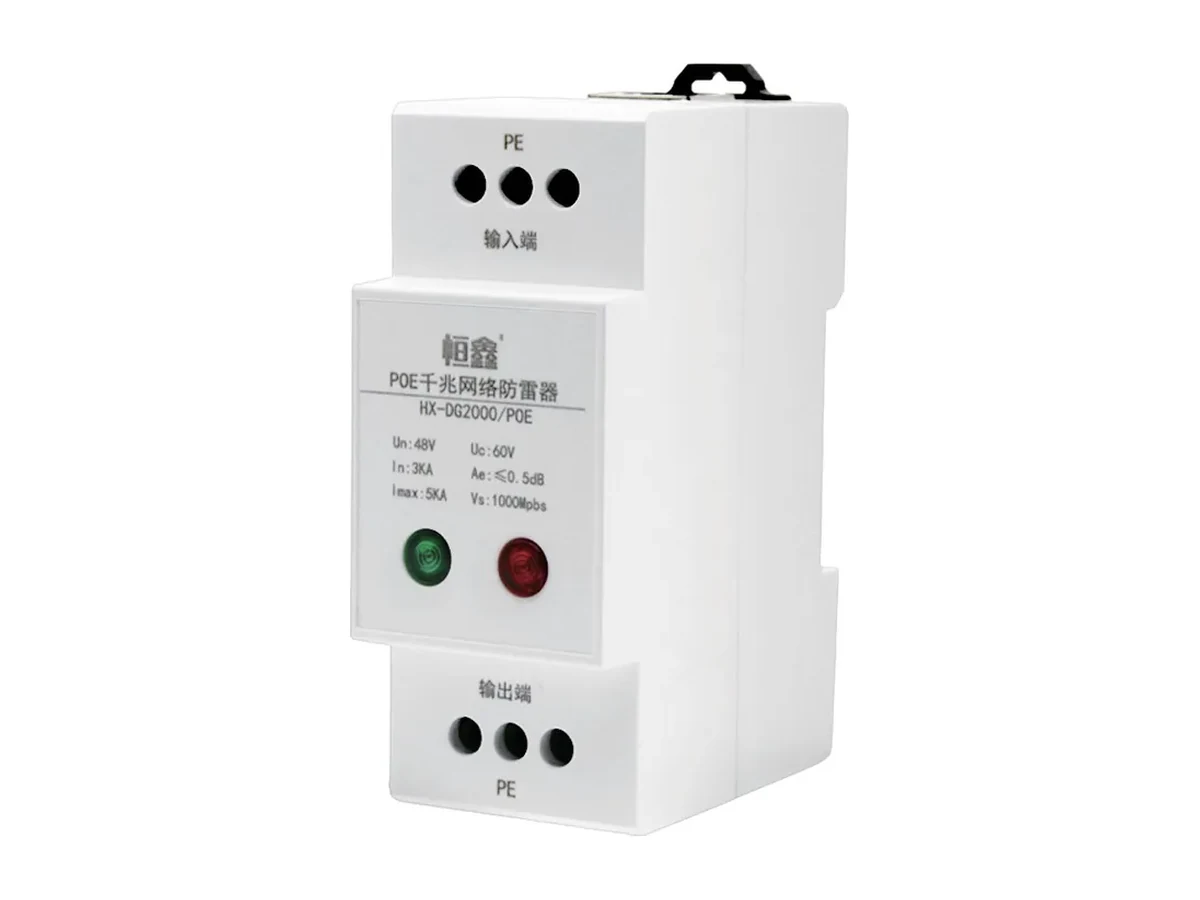
HX-DG2000/POE
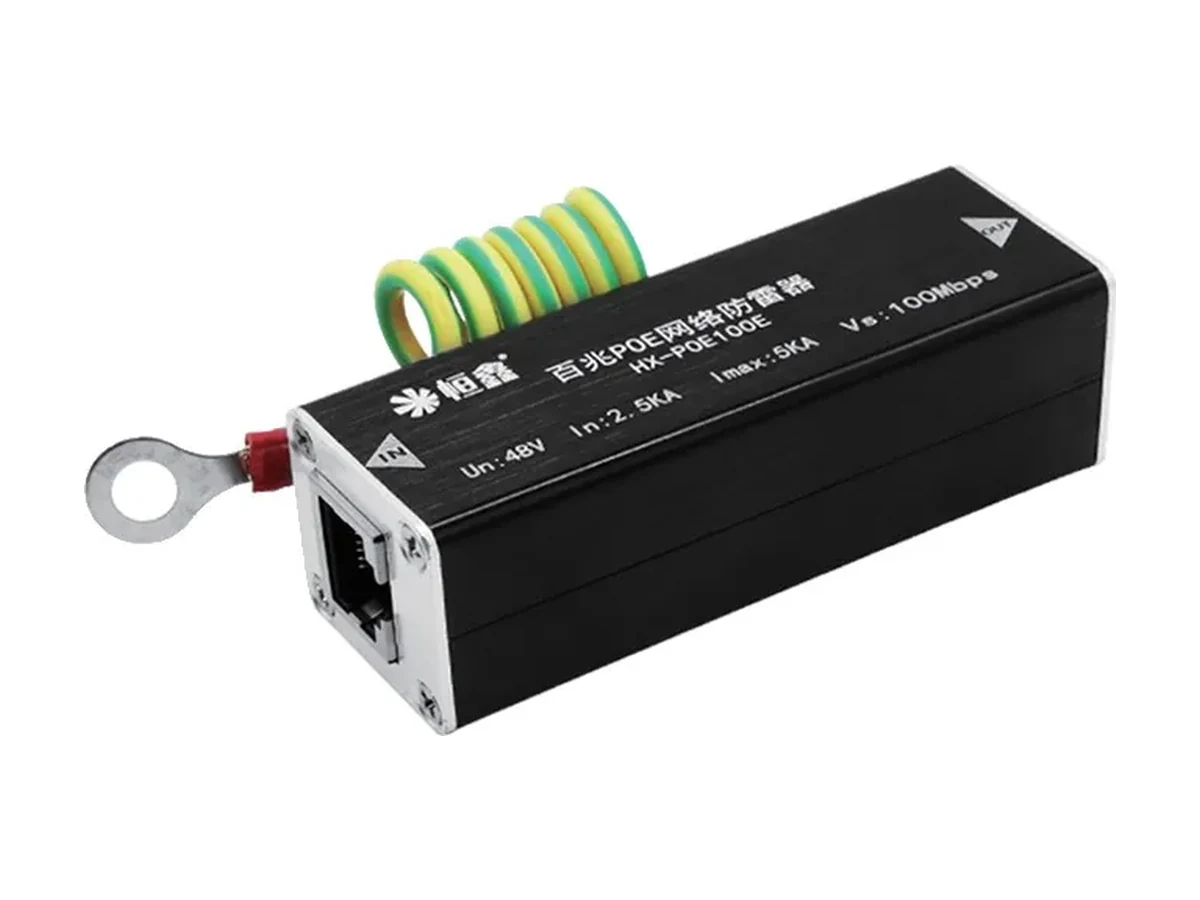
HX-E100
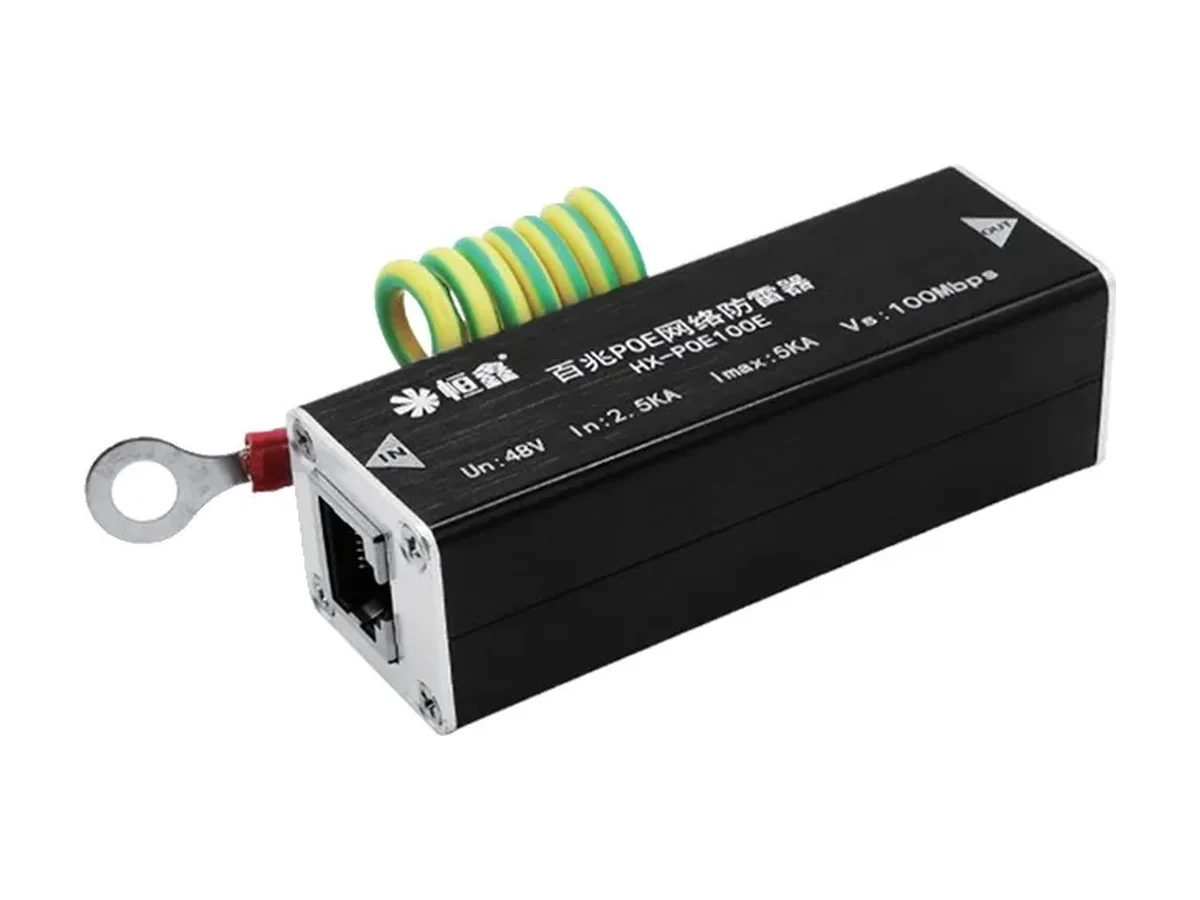
HX-E1000
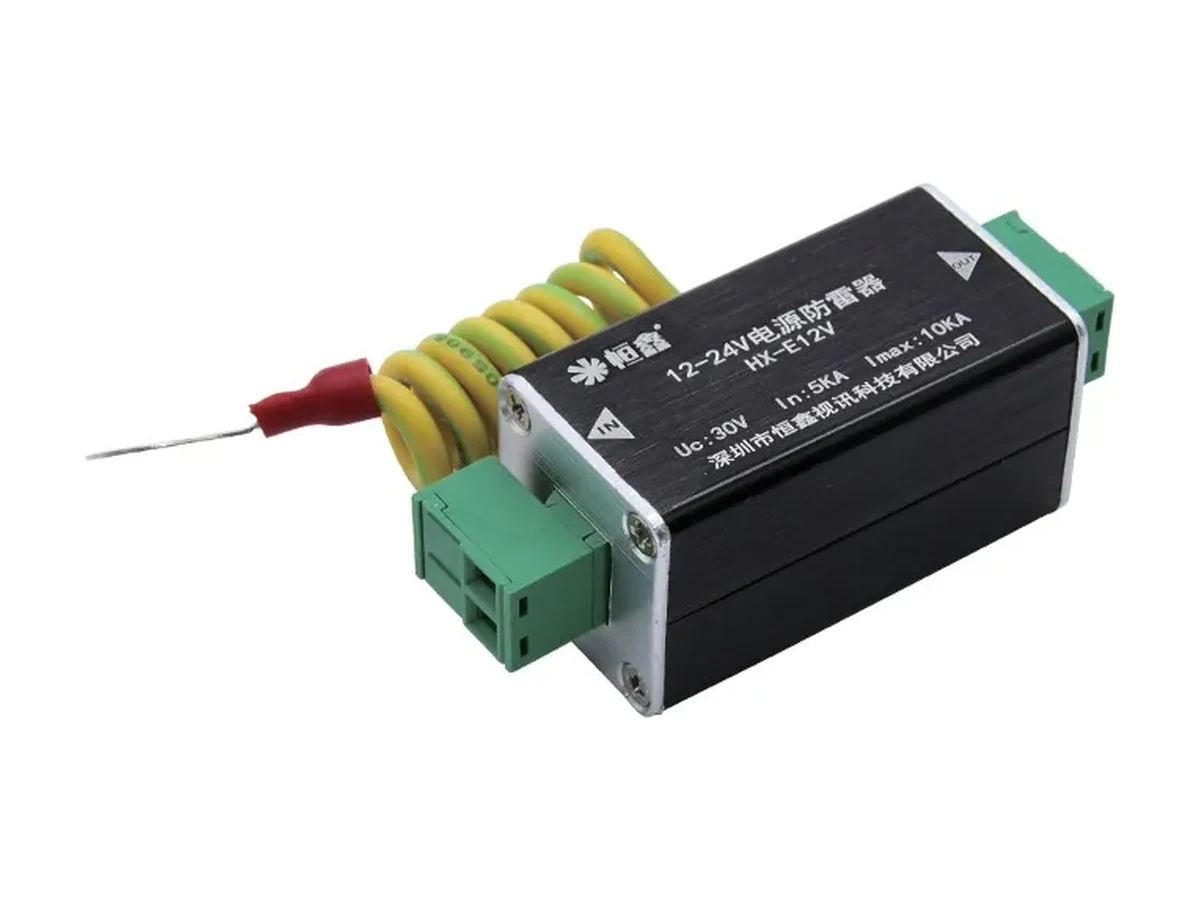
HX-P12V
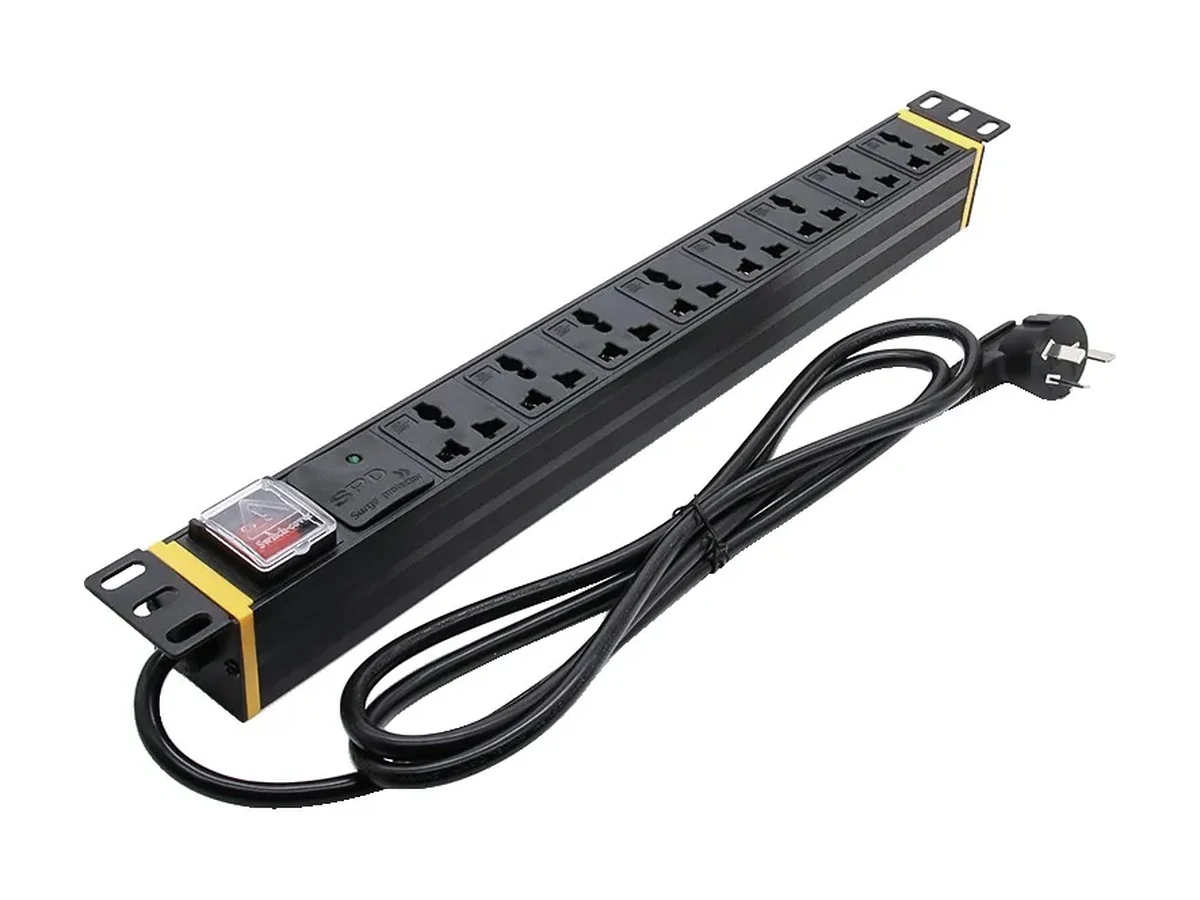
HX-PDU10A/8
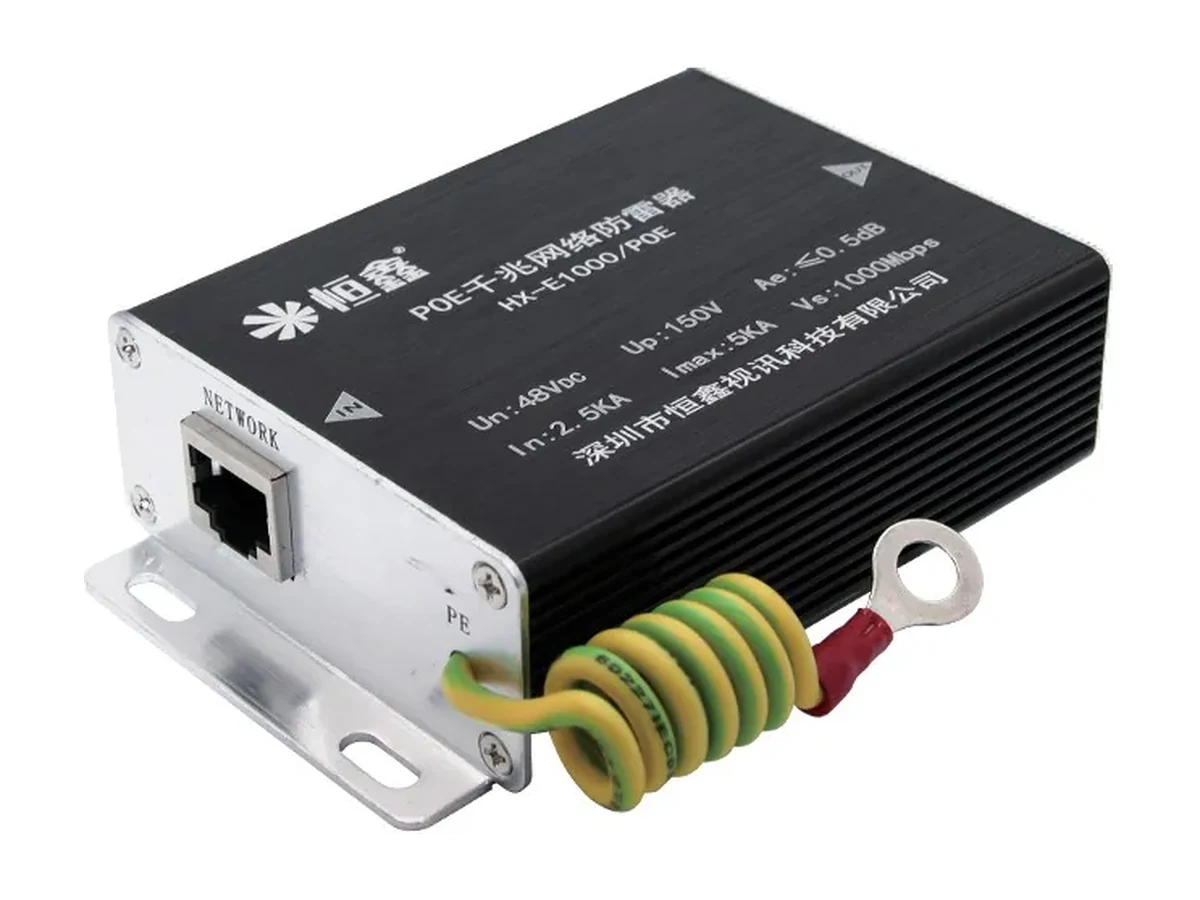
HX-POE1000E
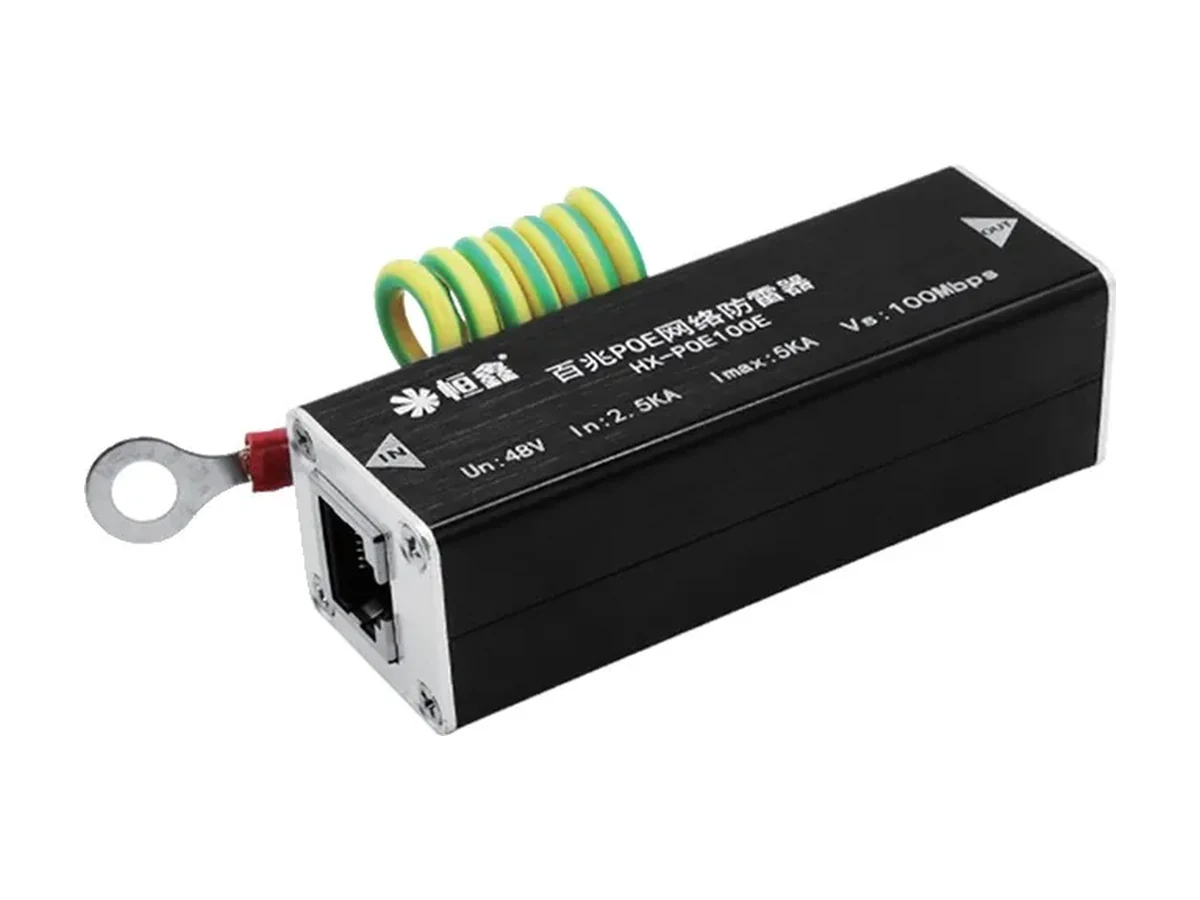
HX-POE100E
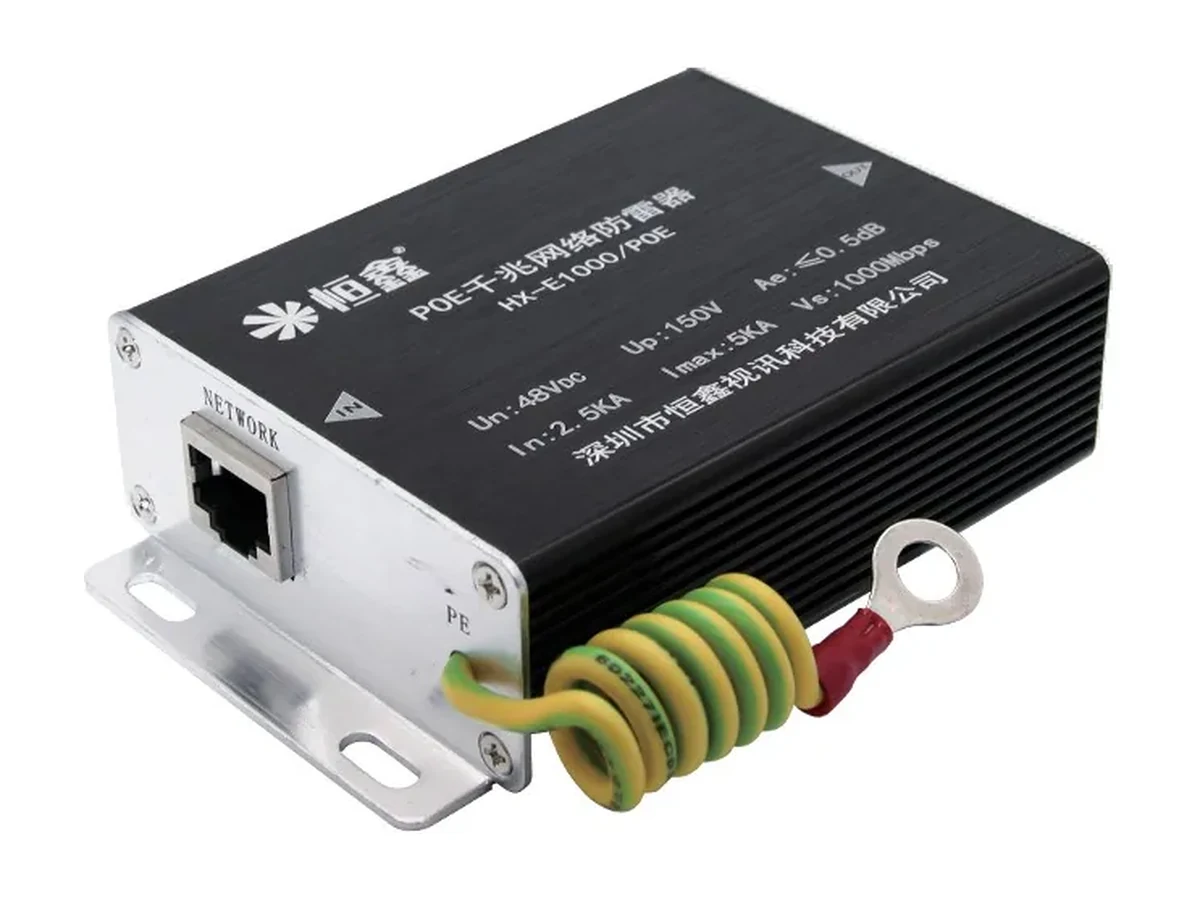
HX-RJ45-E1000/24
Nominal discharge current (In) is what the unit is expected to survive repeatedly over its service life; maximum discharge current (Imax) is the single-shot ceiling. Both are quoted against the 8/20 µs standard test waveform, which a real strike is not.
It depends on where the surge enters. One at the building entry protects everything behind it against the bulk of the energy; units at the camera end protect against surges induced on the last leg, which an entry-level device cannot clamp at the far end.
It needs a low-impedance path to the same earth as the protected equipment. An isolated electrode creates a potential difference between the two ends of the cable — exactly the condition that damages network ports.
Each model is rated for a link speed, shown on the spec table. Fitting a 100 Mbps protector in front of a gigabit camera caps that camera at 100 Mbps regardless of what the switch supports.
20 models
Factory-direct PoE switches — 20 models: {ports} ports, 100M and gigabit, SFP uplinks, {budget} budg…
View category20 models
Factory-direct PoE extenders — 20 models: mid-span repeaters that carry data and power past the 100 …
View category4 models
Factory-direct IP and PoE over coax converters — 4 models: put Ethernet on existing coaxial cable, u…
View category