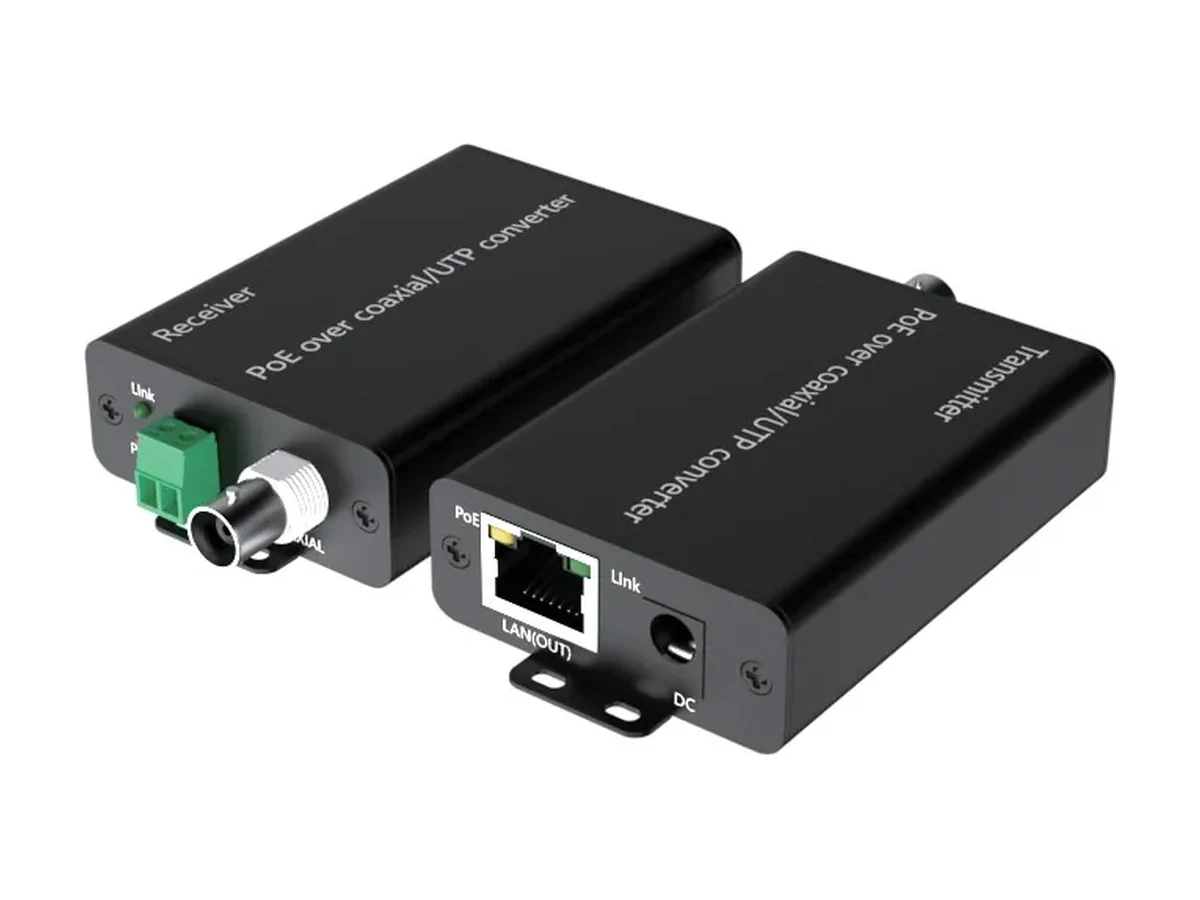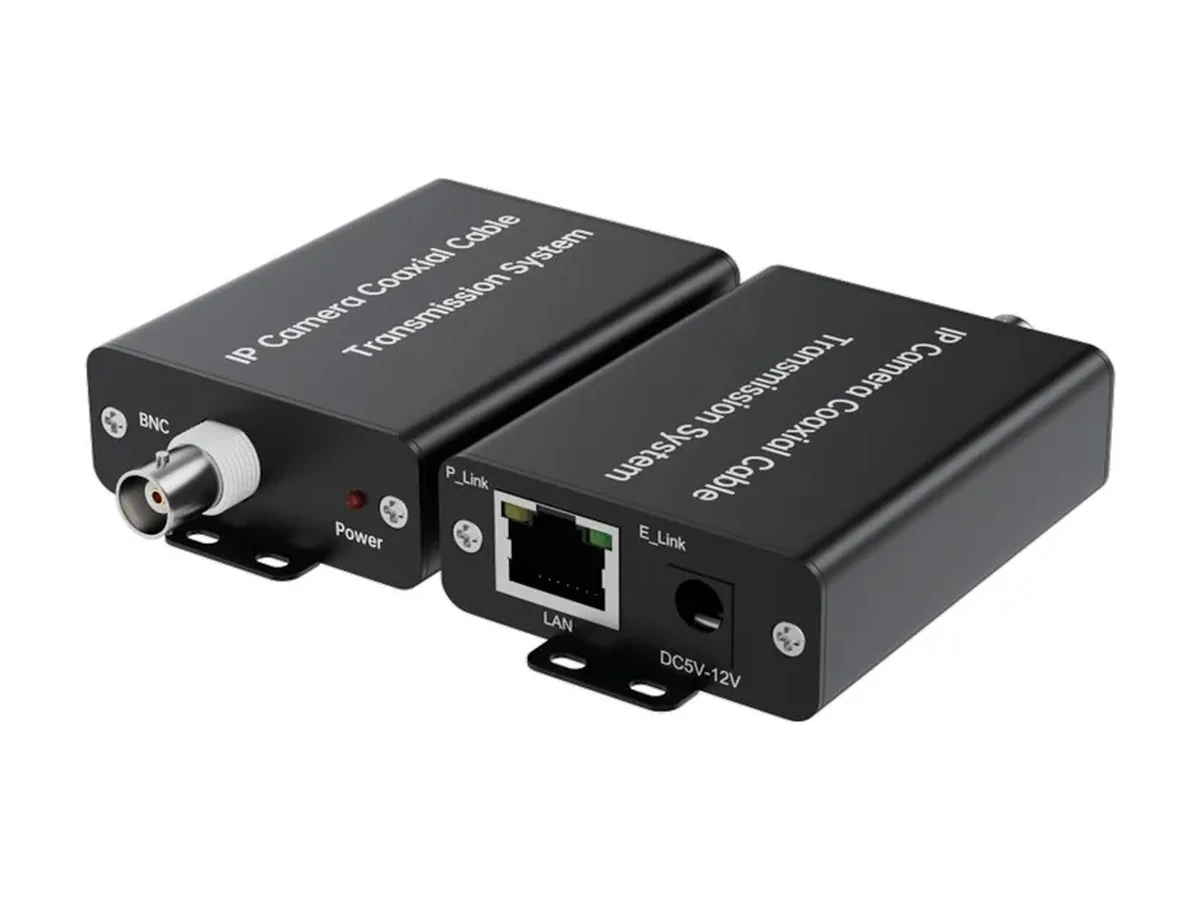
HX-COX902M
IP over Coax Converter, 500 m
- Distance
- 0–500 m
- Rate
- 94 Mbps
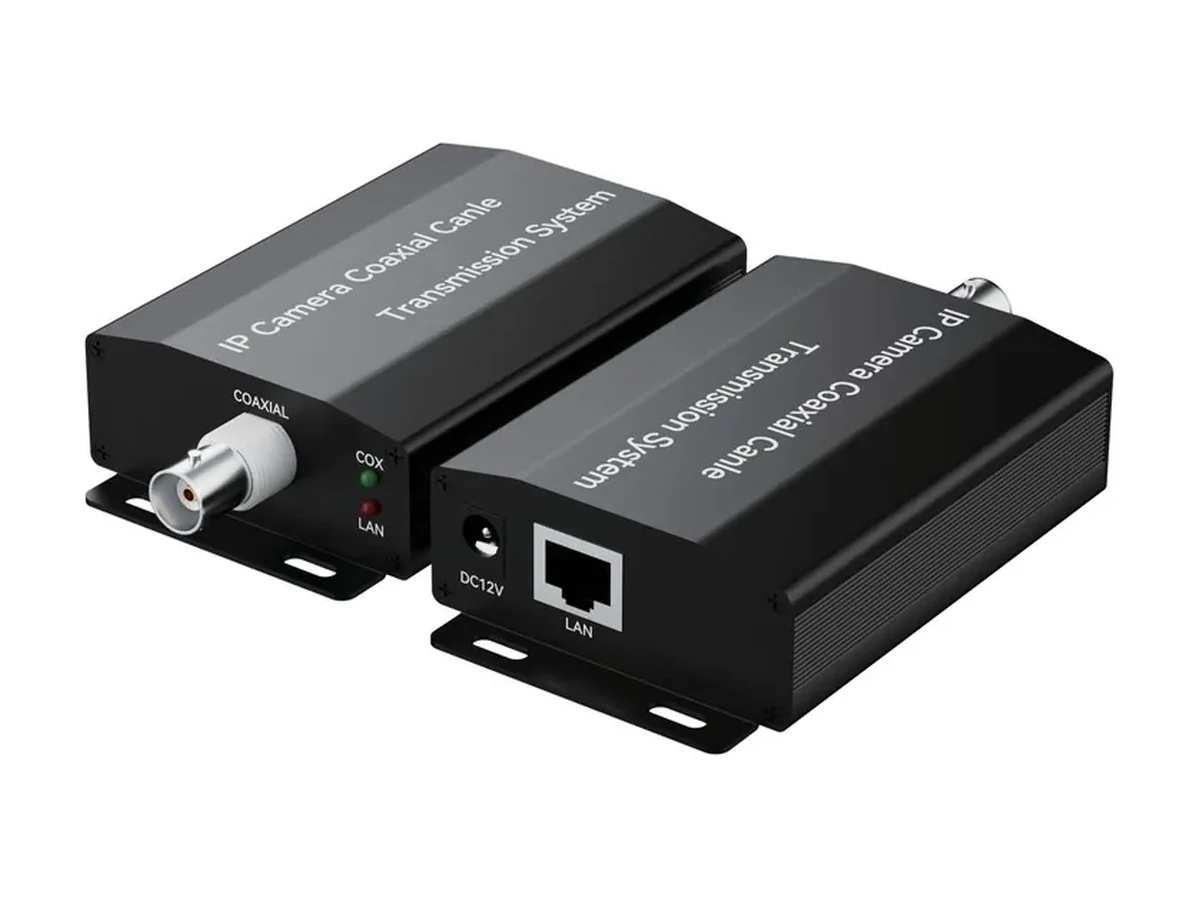
Coax to Ethernet
HX-COX902B IP over Coax Converter, 2 km — 0–2000 m reach; 92 Mbps link rate; over coaxial cable, twisted pair, rvv cable. Supplied from the same factory line as our PoE transmission range, with OEM/ODM branding available.
HX-COX902BOEM/ODM with custom branding, packaging and model numbers available. MOQ and pricing on request.
It puts an Ethernet link onto existing coaxial cable. Buildings wired for analogue CCTV already have coax to every camera position; this converter lets an IP camera use that cable instead of pulling new Cat5/6 through finished walls.
The specification gives 0–2000 m of transmission over Coaxial cable, twisted pair, RVV cable, at 92 Mbps. The pair works as a matched set — one unit at each end of the coax run — and the link speed is limited by the converter, not by the cable.
This model is rated to 0–2000 m. That is far beyond the 100 m copper Ethernet channel limit, which is the whole point: the distance budget is spent on the coax, and the Ethernet side stays short at both ends.
Coax attenuation rises with frequency and with cable age, and a run that worked with analogue video is not automatically clean for a modulated Ethernet signal. Keep the run on one continuous cable, avoid daisy-chained taps designed for analogue, and terminate properly at both ends.
Power input is DC 12 V through a 5.5×2.1 mm jack, and this variant does not pass PoE to the far end.
Without a PoE output the camera at the far end needs its own local supply, so plan a power point at the camera position.
The interface at the coax end is Q9 female; the network side is RJ45.
It is the right answer on retrofit work where the cable already exists, where the run is long, or where the building fabric cannot be opened. It is the wrong answer for a new installation: new Cat6 is cheaper than two converters per run and has no power supply of its own to maintain.
Check two numbers before ordering: the run length against 0–2000 m, and the camera bandwidth. A converter shares its rated throughput across everything on that link, so several cameras on one coax pair is a different calculation from one camera per pair.
The family differs on distance, on throughput and on whether the far end receives PoE.
| Model | Distance | Rate | PoE out |
|---|---|---|---|
| HX-COX902M | 0–500 m | 94 Mbps | — |
| HX-COX902MPOE | 0–500 m | 90 Mbps | 30 W (IEEE802.3af/at) |
It is specified for the media listed above. The practical checks are continuity, characteristic impedance consistency and the condition of the connectors; a coax run that has been spliced several times for analogue taps is the usual reason a converter link will not come up.
No — the pair is the product. One unit modulates onto the coax and the other recovers Ethernet at the far end; a single unit has nothing to talk to.
The published figure is 92 Mbps for this model, which is the throughput the pair sustains over the coax. Plan the camera bitrate against that number, not against the gigabit port on the switch.
No. A PoE extender repeats a PoE link over twisted pair; this converter changes the physical medium to coax. Which one applies depends entirely on what cable is already in the wall.
Specifications for model HX-COX902B. Ask for the current datasheet before quoting.